By Manisha Sahu | America News World
New Delhi | December 5, 2025
Russian President Vladimir Putin arrived in New Delhi on Thursday for a two-day state visit that is expected to define the next decade of India–Russia cooperation. This marks his first trip to India since the beginning of the Ukraine war in 2022, making the visit highly significant not only for bilateral ties but also for broader geopolitical dynamics.

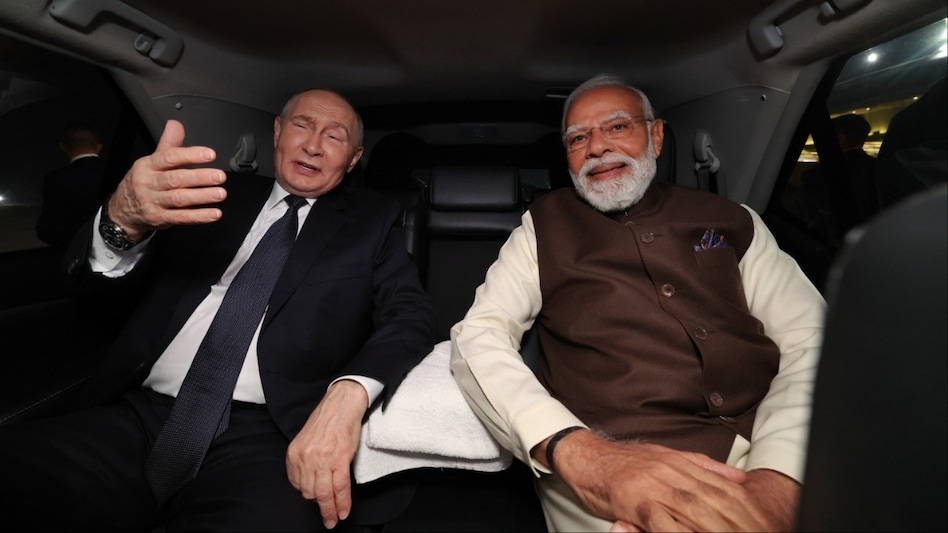
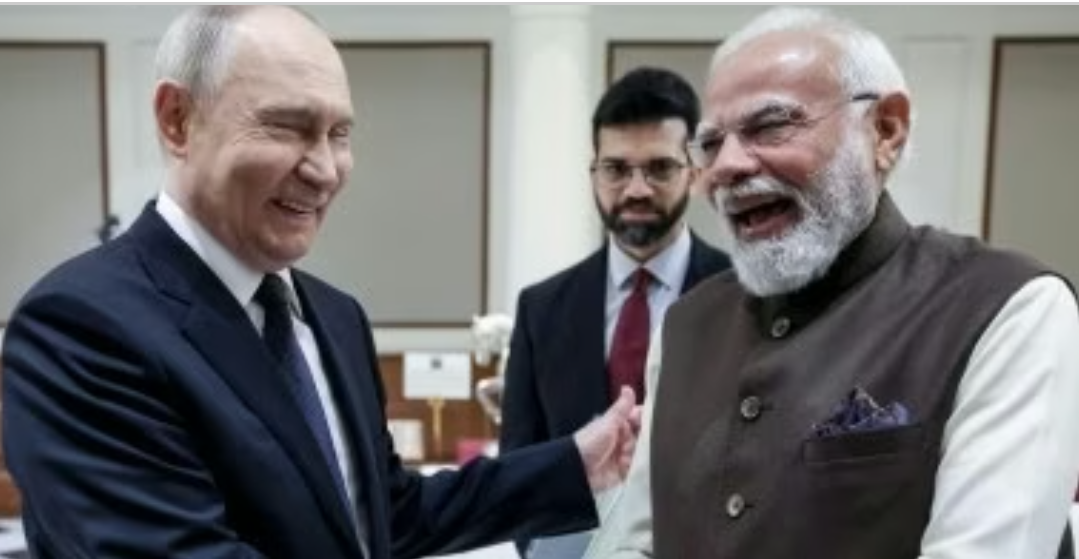
“Prime Minister Modi alongside Russian President Vladimir Putin. (Image: X/@narendramodi)”
Prime Minister Narendra Modi personally received Putin at Palam Airport—an honour extended only to India’s closest partners. The leaders then proceeded to Modi’s official residence at Lok Kalyan Marg for an informal private dinner, seen as an effort to build trust and ensure candid discussions ahead of Friday’s formal dialogues.During the dinner meeting, Modi gifted Putin a Russian translation of the Bhagavad Gita, later highlighting on X that its teachings “inspire millions across the world.” The symbolic gesture reinforced the personal warmth between the two leaders at a time when both countries are navigating complex global pressures.
A Visit with High Stakes and High Expectations
According to official sources, the centrepiece of today’s summit will likely be the announcement of the “Declaration for the Development of Strategic Areas of India–Russia Economic Cooperation until 2030.” This long-term roadmap aims to expand cooperation across several domains, including trade, defence manufacturing, emerging technologies, energy, nuclear cooperation, and labour mobility.Alongside the roadmap, India and Russia are expected to advance discussions on:- A Free Trade Agreement (FTA) between India and the Eurasian Economic Union (EAEU)- A labour mobility pact to facilitate skilled workforce exchange- Enhanced collaboration in Arctic shipbuilding, including joint production of ice-class vessels- New defence technologies and equipment procurement- Simplifying travel, potentially moving toward visa-free entry for Indian tourists. The heightened attention on this visit stems from the geopolitical context. Washington has imposed a 25% penalty tariff on India over its continued import of Russian oil. European nations too are urging India to use its influence on Moscow to push for de-escalation in Ukraine. Despite these pressures, New Delhi has reiterated that its priority is to protect national interests, strategic autonomy, and long-standing ties with Moscow.Senior officials say that while global tensions will inevitably surface during talks, both sides are determined to keep the focus on strengthening bilateral cooperation.

“Prime Minister Narendra Modi and Russian President Vladimir Putin heading to 7, Lok Kalyan Marg for a private dinner. (PTI)”
Packed Day of Diplomacy and Ceremonial Engagements
Putin’s official engagements began Friday morning with a grand ceremonial welcome at Rashtrapati Bhavan. From there, he paid homage at Rajghat before heading to Hyderabad House for formal bilateral discussions with Prime Minister Modi.The two leaders will later address the India–Russia Business Forum at Bharat Mandapam, where CEOs and business leaders from both sides are expected to explore new investment opportunities.Putin is also scheduled to attend the launch of RT’s India edition, marking Russia’s increased media presence in the region. In the evening, he will meet President Droupadi Murmu, who will host a state banquet in his honour.
Defence Cooperation: S-400s, Sukhoi-57, and More
Sources indicate that defence discussions remain a crucial pillar of the visit. The two sides are reviewing progress on several ongoing and future projects, including:- Additional supplies and maintenance of S-400 air defence systems- Potential acquisition or co-development of the Sukhoi-57 fifth-generation fighter aircraft- Expansion of defence industrial cooperation under Make in India- Technology transfer frameworks for aerospace and naval equipmentTalks are also expected to cover civilian nuclear cooperation, including Russian small modular reactors, which India sees as a potential solution for clean and stable energy expansion.
Trade Imbalance a Key Concern

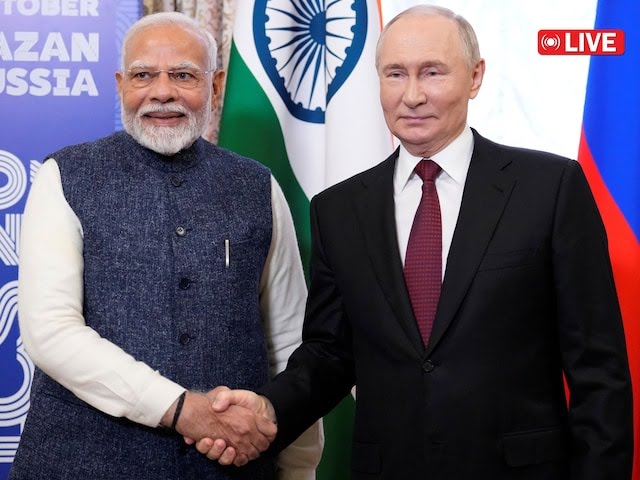
“Prime Minister Narendra Modi received Russian President Vladimir Putin at Delhi’s Palam Airport, officially commencing the Russian leader’s visit to India today.”
India–Russia trade reached an unprecedented USD 68.7 billion in FY 2024-25. However, the trade pattern remains heavily skewed: India imported USD 63.8 billion worth of goods—mostly crude oil—while exporting only USD 4.9 billion.With US secondary sanctions discouraging Indian refiners from buying large volumes of Russian oil, New Delhi has already scaled back purchases, prompting discussions on reassessing earlier trade targets such as the USD 100-billion goal set for the near future.India is now pushing for more market access for its exports, – including:-
– Fruits and vegetables
– Pharmaceuticals
– Processed foods
– Machinery and engineering goods
Russia’s recent approval for importing Indian potatoes and pomegranates is seen as a step toward diversifying trade flows. India is also keen on importing more fertilisers, an area where Russia remains a major global supplier.
FTA Negotiations Gain Momentum
Indian officials confirmed that talks on the FTA with the Eurasian Economic Union have accelerated. A recent negotiation round, held just last week, has reportedly made progress on tariff structures, market access, and regulatory alignment.An FTA with the EAEU—which includes Russia, Belarus, Kazakhstan, Armenia, and Kyrgyzstan—could significantly expand India’s access to Central Asia and Eurasia while giving Russia greater routes for trade diversification amid Western sanctions.
Arctic Shipbuilding Partnership on the Horizon
Russian First Deputy Prime Minister Denis Manturov indicated that shipbuilding for Arctic conditions is emerging as a promising area of cooperation. Joint production of Arctic-class vessels could bridge India’s growing maritime capabilities with Russia’s long-standing expertise in polar navigation.Such collaboration would also support India’s ambitions in the Blue Economy, especially as Arctic routes gain strategic relevance due to climate-driven changes and expanded northern sea routes.
Engagement on Global Platforms
Beyond bilateral matters, Modi and Putin are expected to discuss developments in major international groupings, including:- The United Nations (UN)- Shanghai Cooperation Organisation (SCO)- G20- BRICSIndia, which will chair the BRICS Summit in 2026, is set to extend a formal invitation to Putin. Both nations are aligned in pushing for a more multipolar global order, greater representation for emerging economies, and reforms in global governance institutions.
Strategic Autonomy at the Forefront
As the United States and Europe intensify pressure on India to distance itself from Moscow, New Delhi continues to walk a delicate diplomatic tightrope. India remains one of the few major economies maintaining balanced engagement with all major powers—the US, Europe, Russia, and increasingly, the Indo-Pacific.Officials say that while India is prepared to discuss global concerns, the government is clear that the visit’s priority is to strengthen strategic cooperation with an old and trusted partner.“The intent is to take forward bilateral cooperation across multiple sectors without letting global tensions overshadow the relationship,” one official said.
What to Expect Next
The outcomes of today’s talks are expected to set the tone for India–Russia relations through the rest of the decade. Key announcements may include:- The formal 2030 Strategic Economic Cooperation Roadmap- Progress on the EAEU–India FTA- New defence agreements or joint production initiatives- Steps toward easing travel and potentially visa-free entry- Collaboration on Arctic technology and energy- Expansion of bilateral trade mechanismsAs the world watches closely, the Modi–Putin meeting is poised to reaffirm that despite geopolitical turbulence, India and Russia continue to view each other as essential strategic partners—bound by history, mutual interests, and a shared vision for a multipolar global future.
Discover more from AMERICA NEWS WORLD
Subscribe to get the latest posts sent to your email.